
Customer expectations around conversational experiences are rising as enterprises face increasing operational pressure across support, sales, and customer engagement workflows.
Salesforce reports that 80% of customers now consider the experience a company provides to be as important as its products and services. Static chatbots and scripted voice systems often struggle to maintain natural conversations, workflow continuity, and operational execution across complex customer interactions.
As a result, conversational Artificial Intelligence (AI) is evolving beyond basic bots toward real-time AI agents capable of handling dynamic conversations, workflow orchestration, and cross-system coordination.
This article explores what modern conversational AI demos should actually reveal, how real-time AI agents operate across voice and chat workflows, and why orchestration and operational visibility are becoming critical for enterprise conversational AI deployments.
Executive Summary (2026): Modern conversational AI demos increasingly reveal how enterprise AI agents handle workflow execution, conversational continuity, and real-time customer engagement beyond scripted chatbot interactions. NuPlay is an enterprise voice and chat AI platform built to automate support, sales, and workflow operations across channels.
Key Takeaways:
- Modern conversational AI demos reveal operational depth: Enterprise AI agents increasingly demonstrate workflow execution, orchestration, and real-time interaction handling beyond scripted conversations.
- Workflow orchestration improves conversational continuity: Coordinated workflows help maintain context across voice, chat, support, and operational systems.
- Low latency directly affects conversational quality: Faster response handling improves interruption management, engagement flow, and real-time interaction quality.
- Operational visibility improves optimization: Observability helps teams monitor workflow performance, escalation handling, and conversational outcomes more effectively.
- Integrations support workflow execution: Connected Customer Relationship Management (CRM) systems and enterprise platforms help conversational AI agents coordinate operational actions instead of only responding to prompts.
What Is a Real-Time Conversational AI Agent?
A real-time conversational Artificial Intelligence (AI) agent is a system that can process, understand, and respond to voice or chat interactions dynamically while maintaining conversational context and coordinating operational workflows in real time.
These systems are increasingly designed to execute tasks, coordinate workflows, and manage multi-step interactions across Customer Relationship Management (CRM) systems, support platforms, and operational tools instead of functioning only as question-answer interfaces.
What Conversational AI Looks Like in 2026
Traditional chatbots were primarily designed around predefined scripts and limited decision trees. While these systems could handle basic frequently asked questions, they often struggled when conversations became contextual, multi-step, or operationally complex.
Modern conversational Artificial Intelligence (AI) agents operate differently. Instead of responding with static answers, they are increasingly designed to maintain context, understand intent shifts, and coordinate workflows dynamically across customer interactions.
This evolution is changing enterprise expectations around conversational AI:
- Static bots vs dynamic agents: Modern AI agents can adapt conversations in real time instead of following rigid scripted paths.
- Contextual conversations: Enterprise conversational systems increasingly maintain interaction history and customer context across workflows and channels.
- Workflow-aware interactions: AI agents are now expected to support operational actions such as qualification, routing, scheduling, escalation handling, and workflow coordination.
For executive teams, this shift matters because conversational AI is increasingly becoming part of operational infrastructure rather than just a customer interface layer.
Real-Time AI Requires More Than Fast Responses
Many organizations initially evaluate conversational AI based on response speed alone. However, real-time conversational quality depends on several operational factors beyond low latency.
Enterprise conversational systems increasingly need to support:
- Latency management: Delayed responses disrupt conversational flow and reduce interaction quality during voice and chat engagement.
- Interruption handling: Real conversations involve pauses, clarifications, overlapping dialogue, and changing customer intent that AI systems must manage naturally.
- Conversational continuity: AI agents should maintain context throughout the interaction instead of resetting workflows during transitions or escalations.
- Dynamic decision-making: Enterprise workflows often require AI systems to adjust responses, routing logic, or operational actions based on real-time interaction data.
These capabilities directly affect customer experience quality, workflow efficiency, and containment performance across enterprise operations.
Enterprise Conversational AI Requires Workflow Execution
Enterprise conversational AI is increasingly evaluated based on operational execution instead of conversational capability alone. In many customer-facing environments, answering questions is only one part of the workflow.
Organizations now expect conversational AI platforms to support:
- Action-oriented AI: AI agents increasingly need to trigger actions, complete tasks, and coordinate workflows instead of functioning only as conversational assistants.
- Customer Relationship Management (CRM) coordination: Enterprise workflows often require conversational systems to update customer records, synchronize engagement data, and support sales or support operations in real time.
- Routing workflows: AI agents increasingly coordinate escalation handling, qualification routing, and operational handoffs across teams and systems.
- Operational execution: Conversational AI platforms are now expected to support workflow completion across support, sales, servicing, and operational environments.
For enterprise leaders, this is becoming one of the biggest differentiators between basic conversational tools and scalable conversational AI platforms built for production environments.
Also Read: What Is Voice Conversational AI? 5 Ways Businesses Use It
What to Look for in a Conversational AI Demos in 2026?
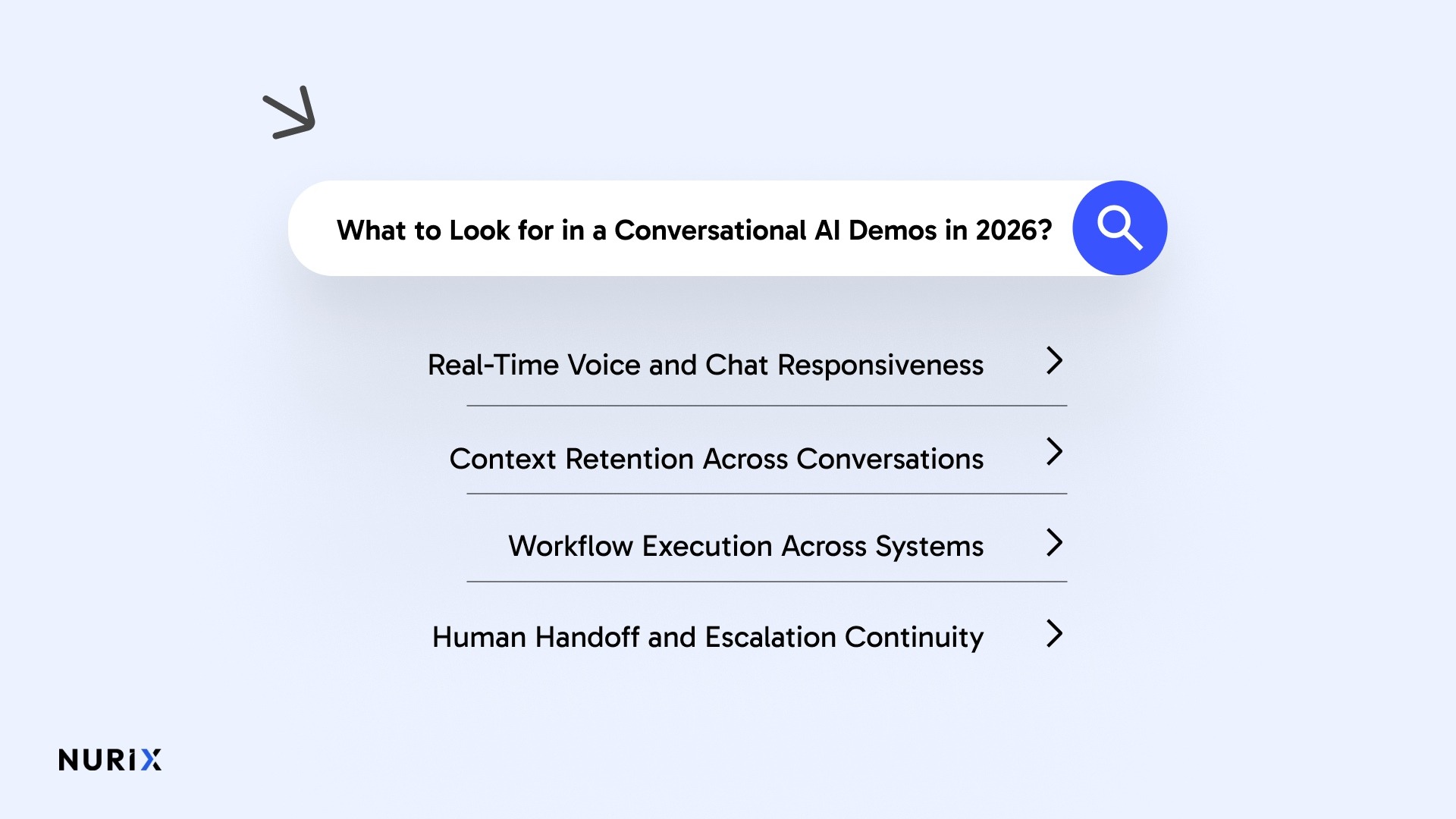
Many conversational AI demos are designed to showcase short, controlled interactions that appear polished during isolated conversations. However, enterprise teams evaluating conversational AI platforms increasingly need to assess how these systems perform during real operational workflows across support, sales, and customer engagement environments.
A strong conversational AI demo should reveal how the system handles workflow execution, context continuity, escalation coordination, and operational complexity under real-world conditions. This is often where the biggest differences appear between production-ready conversational AI platforms and lightweight scripted systems.
Real-Time Voice and Chat Responsiveness
Real-time responsiveness is one of the first indicators of conversational quality during a conversational AI demo. Delayed responses, awkward pauses, or rigid interaction timing can quickly reduce conversational flow and customer engagement quality.
Enterprise buyers should evaluate:
- Low latency: Faster response generation helps maintain more natural conversation flow across voice and chat interactions.
- Natural dialogue flow: AI agents should support dynamic conversations instead of forcing users into rigid scripted sequences.
- Interruption handling: Real conversations involve pauses, corrections, overlapping speech, and changing intent that conversational systems must manage effectively.
Many demos showcase simple question-answer interactions but avoid testing interruption handling or longer conversational continuity under real operating conditions.
Context Retention Across Conversations
Conversational continuity becomes increasingly important when workflows involve multiple steps, channels, or operational transitions. Enterprise conversational AI systems should maintain customer context throughout the interaction instead of resetting conversations repeatedly.
Buyers should evaluate:
- Memory continuity: The system should retain conversational context across ongoing interactions.
- Session persistence: Customer interactions should continue smoothly across channels and workflow transitions.
- Multi-step interaction handling: AI agents should manage conversations that involve qualification, routing, scheduling, escalation handling, or workflow coordination across multiple stages.
This becomes especially important for enterprise workflows where conversations rarely end after a single interaction.
Workflow Execution Across Systems
One of the biggest limitations of many conversational AI demos is that they focus heavily on conversation quality while avoiding operational execution workflows. Enterprise conversational AI increasingly needs to coordinate actions across systems instead of functioning only as a conversational layer.
Production-ready conversational AI systems should demonstrate:
- Customer Relationship Management (CRM) updates: Real-time synchronization of customer information and interaction data.
- Routing coordination: Intelligent routing across support, sales, or operational workflows.
- Workflow triggering: Ability to initiate operational processes, follow-ups, scheduling, or workflow automation dynamically.
- Escalation handling: Coordinated transitions between AI workflows and human teams when workflows become more complex.
This operational execution layer is often what separates enterprise conversational AI platforms from basic chatbot systems.
Human Handoff and Escalation Continuity
Enterprise conversational AI workflows inevitably involve situations where human intervention becomes necessary. Poor escalation handling often creates fragmented customer experiences where customers must repeat information or restart workflows after transfer.
Strong conversational AI demos should demonstrate:
- Preserving context during escalation: Customer information and interaction history should transfer smoothly during handoffs.
- Routing to human agents: Escalation workflows should coordinate intelligently across teams and operational systems.
- Workflow visibility: Teams should maintain operational visibility into handoffs, escalations, and conversational workflow performance.
Many scripted demos avoid complex escalation scenarios entirely, even though escalation continuity often becomes one of the most operationally important factors during real deployment.
Also Read: Top 8 AI Conversational Agents Software 2026 Compared
Why Enterprises Are Moving Beyond Scripted Conversational Bots
Customer expectations around conversational experiences have changed significantly as digital engagement becomes more central across support, sales, and customer service operations. Users increasingly expect conversational systems to respond naturally, understand changing intent, and maintain continuity throughout the interaction.
Enterprise conversational AI systems are now expected to support:
- Natural dialogue: Conversations should feel dynamic and responsive instead of rigid or heavily scripted.
- Contextual understanding: AI agents increasingly need to understand conversation history, intent changes, and operational context across interactions.
- Faster interactions: Customers expect real-time responses and smoother engagement across voice and chat channels.
This shift is increasing pressure on enterprises to move beyond static conversational systems that struggle with complex or evolving customer interactions.
Scripted Systems Create Operational Friction
Traditional scripted bots often operate effectively only within narrow conversation paths. Once interactions become more dynamic or operationally complex, these systems frequently create friction across customer-facing workflows.
Common limitations include:
- Repetitive conversations: Customers often need to repeat information during workflow transitions or escalations.
- Disconnected workflows: Scripted systems frequently operate separately from operational tools, customer records, or workflow coordination layers.
- Poor escalation handling: Many conversational systems struggle to maintain continuity when interactions move between AI workflows and human teams.
Over time, these operational gaps can reduce conversational quality while increasing pressure on support, sales, and customer engagement teams.
Cross-Channel Continuity Is Becoming Essential
Enterprise customer journeys increasingly move across multiple communication channels during a single interaction. A customer may begin with chat support, continue through voice engagement, and later receive follow-up communication through email or support workflows.
Modern conversational AI systems increasingly need to coordinate interactions across:
- Voice engagement workflows
- Chat-based customer interactions
- Email communication workflows
- Support coordination environments
Cross-channel continuity helps maintain customer context, reduce repeated interactions, and improve workflow coordination across customer-facing operations. This is becoming increasingly important for enterprises managing large engagement volumes across distributed communication environments.
Also Read: How AI Voice Agents Enhance Multilingual Customer Support
Core Components of a Real-Time Conversational AI Platform
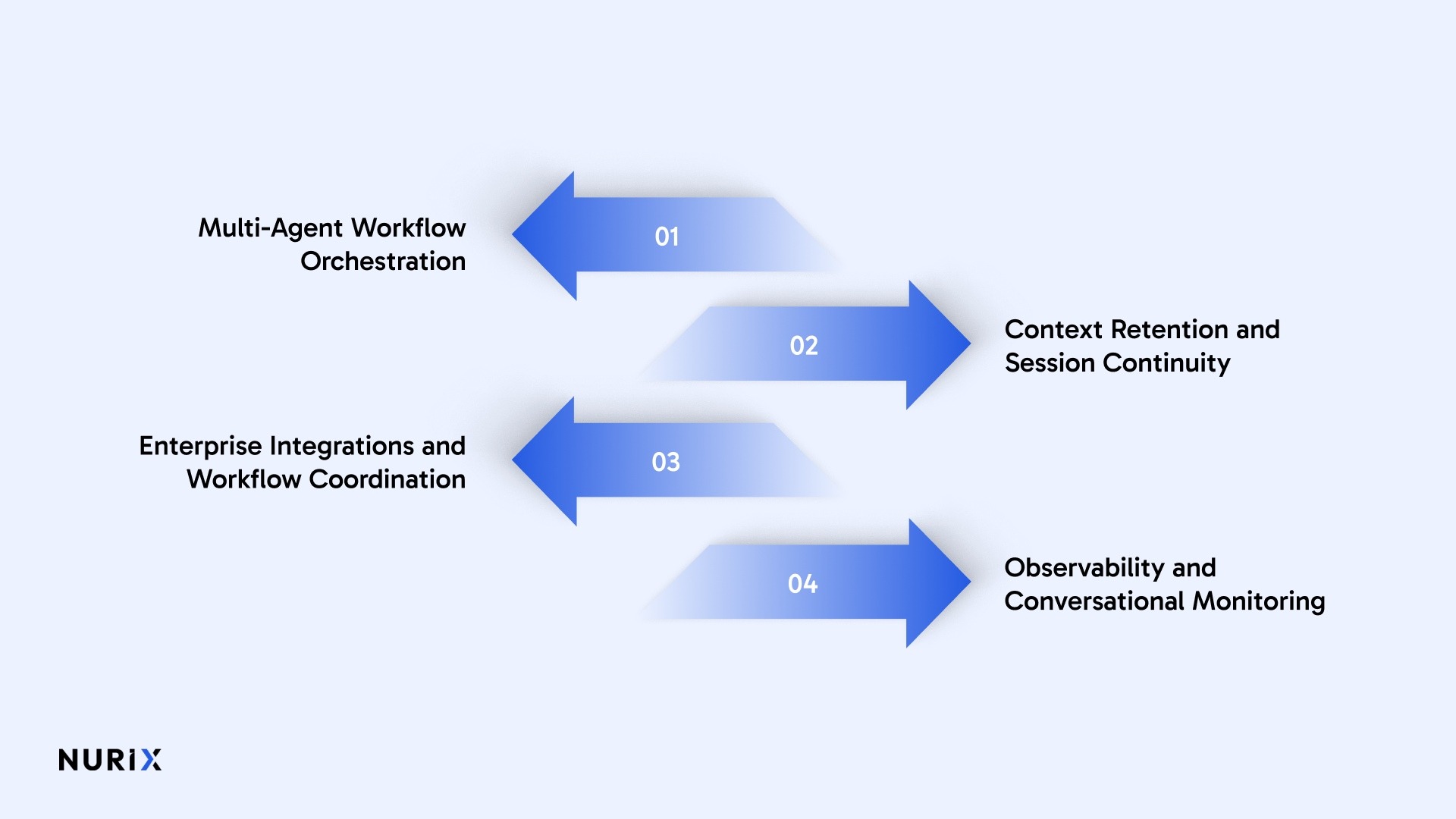
Real-time conversational experiences depend heavily on low-latency interaction handling across voice and chat channels. Delayed responses, awkward pauses, or inconsistent timing can quickly disrupt conversational flow and reduce engagement quality.
Enterprise conversational AI platforms increasingly prioritize fast response handling, interruption management, and smoother conversational continuity to support more natural customer interactions across high-volume environments.
Multi-Agent Workflow Orchestration
Enterprise conversations rarely follow a single linear path. Qualification workflows, support interactions, escalation handling, and operational coordination often involve multiple systems and workflow decisions simultaneously.
Multi-agent orchestration helps conversational AI platforms coordinate these workflows more effectively across sales, support, and operational environments while maintaining workflow continuity throughout the interaction.
Context Retention and Session Continuity
Enterprise customer interactions often span multiple conversations, channels, and workflow transitions. Conversational AI platforms increasingly need to maintain context throughout these interactions instead of restarting workflows repeatedly.
Context retention helps support:
- conversational continuity
- smoother escalations
- reduced repetition
- more consistent customer engagement across channels
This becomes especially important for longer or multi-step enterprise workflows.
Enterprise Integrations and Workflow Coordination
Conversational AI platforms increasingly operate as workflow execution layers instead of standalone conversation tools. Enterprise deployments often require coordination across Customer Relationship Management (CRM) systems, support platforms, operational tools, and customer engagement environments.
Strong integration capabilities help conversational AI agents trigger workflows, update systems, coordinate routing, and support operational execution across enterprise environments.
Observability and Conversational Monitoring
As conversational AI deployments scale, operational visibility becomes increasingly important for maintaining workflow quality and customer experience consistency.
Enterprise conversational AI platforms increasingly provide:
- workflow monitoring
- escalation visibility
- conversational analytics
- operational performance tracking
This helps teams identify workflow bottlenecks, monitor conversational quality, and optimize customer engagement workflows over time.
Also Read: AI Voice Bots: The Essential Guide to Enterprise Operations
Conversational AI Demo Examples Across Enterprise Workflows
A modern conversational AI demo should show how enterprise support workflows operate beyond basic question-answer interactions. For example, a customer may begin through voice support to check an account issue, continue through chat for document submission, and later require escalation to a live support representative.
In a production-ready workflow, the conversational AI system should:
- manage inbound support interactions in real time
- route tickets based on urgency or intent
- coordinate escalation handling
- maintain customer context across voice, chat, and support channels
Strong conversational AI demos typically reveal how smoothly workflows continue during escalation scenarios instead of only showcasing simple chatbot conversations.
AI Lead Qualification Demo
Enterprise lead qualification workflows often involve multiple operational steps beyond collecting contact information. A realistic conversational AI demo should show how AI agents handle dynamic qualification conversations while coordinating workflow execution across sales systems.
For example, an AI qualification workflow may:
- ask contextual qualification questions
- prioritize leads based on engagement or intent
- synchronize customer data into Customer Relationship Management (CRM) systems
- coordinate scheduling with sales teams automatically
This helps enterprises evaluate whether the conversational AI platform can support operational execution instead of functioning only as a conversational interface.
Appointment Scheduling and Engagement Demo
Scheduling workflows are one of the clearest indicators of how well conversational AI handles workflow continuity and operational coordination. A strong demo should show how conversational systems manage scheduling conversations naturally across voice and chat interactions.
Enterprise scheduling workflows increasingly involve:
- real-time appointment coordination
- automated follow-up communication
- reminders and rescheduling workflows
- conversational continuity across channels
This helps organizations evaluate whether conversational AI can maintain smoother customer engagement across longer interaction cycles.
Internal Workflow Automation Demo
Conversational AI demos increasingly include internal operational workflows instead of focusing only on customer-facing use cases. Enterprises now use conversational AI systems to support internal requests, workflow coordination, and operational routing across departments.
For example, conversational AI workflows may help:
- route internal support requests
- coordinate approval workflows
- manage operational handoffs
- automate repetitive internal processes
These demos often provide stronger insight into enterprise deployment readiness because they reveal how the system handles operational coordination across more complex workflow environments.
Also Read: 5 Top AI Agents for B2B Lead Qualification Tools [2026]
Building a Real-Time Conversational AI Agent Beyond the Demo Stage
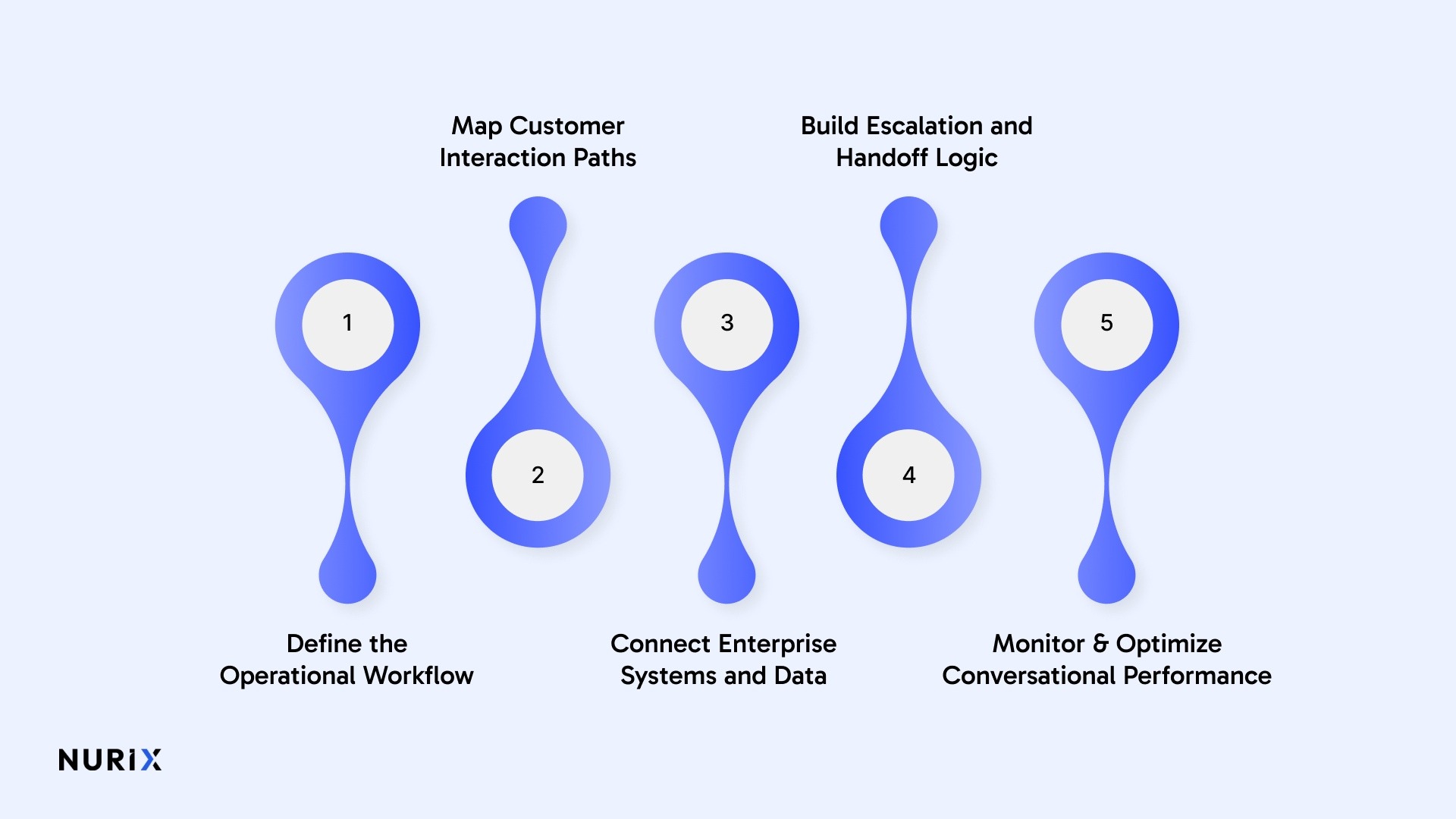
Many conversational AI demos showcase polished interactions under controlled conditions, but enterprise deployment requires much more than conversational quality alone. Real-world conversational AI systems must support workflow continuity, operational execution, escalation coordination, and cross-system integration across high-volume environments.
Moving from demo-stage conversational AI to production-ready deployment typically involves designing workflows that can operate consistently across customer interactions, operational systems, and enterprise communication channels.
Step 1: Define the Operational Workflow
The most effective conversational AI deployments begin with a clearly defined operational workflow instead of a standalone conversational use case. Enterprises should identify where conversational AI will support measurable operational outcomes across support, sales, scheduling, servicing, or internal workflow environments.
This helps teams design conversational workflows around operational execution instead of isolated chatbot interactions.
Step 2: Map Customer Interaction Paths
Enterprise conversations rarely follow a single scripted path. Customer interactions often involve interruptions, escalations, follow-up actions, and channel transitions across voice, chat, email, or support workflows.
Mapping these interaction paths early helps conversational AI systems maintain continuity across:
- customer engagement workflows
- escalation scenarios
- routing decisions
- cross-channel transitions
This improves conversational consistency during real operational deployment.
Step 3: Connect Enterprise Systems and Data
Conversational AI agents become significantly more operationally useful when connected to Customer Relationship Management (CRM) systems, support platforms, workflow tools, and customer engagement systems.
Enterprise integrations help conversational AI workflows:
- synchronize customer context
- trigger operational actions
- coordinate routing workflows
- support workflow execution across systems
This is often one of the biggest differences between demo-stage conversational AI and production-ready enterprise deployments.
Step 4: Build Escalation and Handoff Logic
Human escalation remains a critical part of enterprise conversational workflows. AI systems should support intelligent routing and preserve interaction context during handoffs instead of forcing customers or agents to restart conversations.
Well-designed escalation workflows help improve:
- workflow continuity
- support coordination
- customer experience consistency
- operational efficiency during complex interactions
Step 5: Monitor and Optimize Conversational Performance
Enterprise conversational AI requires ongoing operational monitoring after deployment. Teams increasingly need visibility into workflow performance, escalation handling, conversational quality, and customer engagement outcomes.
Monitoring conversational workflows helps organizations:
- identify operational bottlenecks
- improve interaction quality
- optimize workflow execution
- maintain more consistent customer engagement over time
This operational visibility becomes increasingly important as conversational AI deployments scale across enterprise environments.
Also Read: What Is Voice AI for Sales? Use Cases + Tools [2026]
How NuPlay Supports Real-Time Conversational AI Workflows
As conversational AI deployments scale, maintaining workflow continuity across voice, chat, support, sales, and operational environments becomes increasingly difficult. Enterprise teams often manage customer interactions across multiple communication channels, systems, and workflows simultaneously, which creates challenges around conversational consistency, routing coordination, escalation handling, and operational visibility.
NuPlay is an enterprise voice and chat AI platform built to automate support, sales, and workflow operations across channels. Its orchestration-driven approach helps enterprises coordinate conversational workflows while maintaining stronger operational visibility across systems and customer interactions.
Enterprise teams use NuPlay to support:
- Voice and chat orchestration: Coordinating conversational workflows across voice, chat, email, and digital engagement channels while maintaining workflow continuity across customer interactions.
- Sales AI Agents: Automating lead qualification, routing, appointment scheduling, and customer engagement workflows across inbound sales environments.
- Support AI Agents: Managing support interactions, escalation handling, ticket coordination, and customer servicing workflows across customer-facing operations.
- NuRep conversational consistency: Helping enterprises maintain more consistent conversational quality, tone alignment, and customer engagement experiences across channels.
- NuPulse observability: Monitoring workflow execution, conversational performance, escalation handling, operational activity, and customer engagement workflows in real time.
- Enterprise integrations: Connecting Customer Relationship Management (CRM) systems, support platforms, communication tools, and operational workflows across enterprise environments.
- Workflow continuity across channels: Maintaining conversational context and operational coordination during workflow transitions, escalations, and cross-channel interactions.
This orchestration-driven approach helps enterprises reduce operational fragmentation while improving conversational continuity, workflow execution, and operational visibility across real-time conversational AI deployments.
Final Thoughts
Conversational AI is evolving beyond scripted chatbot interactions as enterprises work to improve conversational continuity, workflow execution, and real-time customer engagement across increasingly complex operational environments. Many conversational AI demos appear polished in controlled scenarios but struggle to maintain workflow coordination, escalation continuity, and operational visibility during real deployment.
One practical way to evaluate your current conversational AI environment is to identify where workflows still depend heavily on manual coordination, disconnected systems, or repeated customer interactions during escalations and channel transitions. These operational gaps often create the biggest impact on conversational quality and workflow efficiency.
Real-time conversational AI works best when orchestration, observability, integrations, and cross-channel continuity operate together across enterprise workflows.
If your team is evaluating conversational AI platforms, book a Custom Demo to see how NuPlay supports real-time conversational AI workflows across voice, chat, support, and operational environments.