
Insurance sales teams are under increasing pressure to respond to inbound leads faster while maintaining qualification quality across growing inquiry volumes. Research from Harvard Business Review found that companies responding to leads within an hour are significantly more likely to qualify prospects than teams responding after longer delays.
That pressure is one reason why ai lead qualification insurance workflows are becoming a larger focus for carriers, agencies, and insurance sales operations leaders. Instead of relying entirely on manual callbacks and repetitive intake questions, teams are increasingly using AI voice agents to handle initial conversations, collect lead information, prioritize high-intent prospects, and coordinate routing across sales workflows.
In this article, you will learn why insurance teams are adopting AI for faster lead qualification, where automation improves conversion efficiency, and what enterprise teams should evaluate before deploying AI qualification workflows at scale.
Executive Summary (2026): AI lead qualification is helping insurance teams improve response speed, automate repetitive intake workflows, and increase conversion efficiency. Enterprise teams are increasingly using AI voice agents to qualify leads, improve routing, and streamline sales coordination at scale. NuPlay is an enterprise voice and chat AI platform built to automate support, sales, and workflow operations across channels.
Key Takeaways:
- Lead Response Speed: Faster engagement improves qualification rates because insurance prospects often move to competitors when callbacks and follow-ups are delayed.
- Qualification Workflows: AI voice agents reduce repetitive intake work by handling initial conversations, collecting lead information, and routing qualified prospects automatically.
- Routing Accuracy: CRM-connected qualification improves lead routing because sales teams receive cleaner customer context and better prioritization across inbound workflows.
- Workflow Orchestration: Insurance qualification requires more than scripted bots because multi-step workflows often involve routing logic, CRM coordination, and underwriting preparation.
- Conversion Visibility: Analytics and observability improve optimization because insurance teams can identify qualification gaps, response delays, and workflow bottlenecks earlier.
What AI Lead Qualification Means in Insurance
AI lead qualification in insurance is no longer limited to scripted chat flows or automated form collection. Modern qualification systems are increasingly designed to handle conversational interactions that adapt based on customer responses, qualification intent, and workflow requirements.
Instead of asking every prospect the same static questions, AI voice agents can guide conversations dynamically while collecting qualification data in real time.
Core capabilities often include:
- Conversational qualification
- Intent detection
- Dynamic questioning
- Lead scoring
- Qualification prioritization
This helps insurance teams reduce repetitive intake work while improving qualification consistency across large lead volumes. It also allows sales teams to focus more on high-intent prospects instead of manually screening every inbound inquiry.
How AI Voice Agents Support Insurance Workflows in 2026
AI voice agents are increasingly being used to streamline early-stage insurance sales workflows where response speed and qualification coverage directly affect conversion outcomes.
These systems can support:
- Inbound lead handling
- Qualification calls
- Appointment scheduling
- CRM updates
- Lead routing coordination
- Follow-up automation
For example, an AI voice agent can answer an inbound inquiry, collect policy requirements, identify customer intent, schedule a callback, and update the Customer Relationship Management (CRM) system before transferring the lead to a sales representative.
This reduces delays between inquiry and engagement while helping insurance teams maintain more consistent qualification workflows.
Why Workflow Depth Matters
Many insurance qualification workflows involve more than a single conversation. Prospects may require additional verification, underwriting preparation, policy clarification, or escalation to specialized teams before qualification is complete.
That is why workflow depth becomes critical in enterprise insurance environments.
Effective AI qualification workflows often require:
- Multi-step qualification handling
- Underwriting preparation support
- Escalation workflows
- Cross-system coordination
- Human handoff quality
Poorly designed workflows can create fragmented customer experiences, especially when conversation context is lost during transfers between AI systems and sales teams. Enterprise insurance teams increasingly prioritize orchestration, integrations, and escalation visibility to ensure qualification workflows remain accurate, coordinated, and scalable.
Also Read: 4 Powerful Ways Insurers Use AI in Customer Communications
Why Insurance Lead Qualification Is Becoming More Difficult
Insurance buying journeys have become increasingly digital, and prospects now expect fast engagement across every inquiry channel. Whether customers are requesting policy quotes, comparing plans, or asking coverage questions, delayed follow-ups often reduce the chances of successful qualification.
Several factors are increasing response pressure for insurance teams:
- Digital-first insurance journeys
- Competitive lead environments
- High inbound inquiry volume
- Multi-channel customer engagement
In highly competitive markets, prospects frequently contact multiple providers at the same time. Teams that respond slowly often lose qualified leads before the sales conversation even begins.
Manual Qualification Slows Sales Teams Down
Many insurance teams still rely heavily on manual qualification workflows, where agents handle repetitive intake tasks before determining whether a lead is ready for sales engagement.
This often includes:
- Repetitive intake questions
- Manual data collection
- Delayed callbacks
- Limited qualification coverage
- Agent workload pressure
These workflows consume valuable sales time and make it difficult to respond consistently across growing lead volumes. As inquiry volumes increase, agents may prioritize only high-visibility leads while lower-priority prospects experience slower follow-up or no engagement at all.
Manual qualification also creates operational bottlenecks when sales teams switch between Customer Relationship Management (CRM) systems, spreadsheets, and communication tools to gather customer information.
Poor Qualification Impacts Conversion Efficiency
Qualification quality directly affects how efficiently insurance teams convert inbound inquiries into sales opportunities. When qualification workflows lack consistency, sales teams often spend time pursuing poorly matched leads while qualified prospects experience delays or routing errors.
Common operational issues include:
- Low-quality routing
- Incomplete customer context
- Missed sales opportunities
- Inconsistent prioritization
- Rising customer acquisition costs
Over time, these inefficiencies reduce conversion visibility and make it harder for insurance operations leaders to optimize sales workflows. This is one reason many teams are evaluating AI-assisted qualification systems that can improve routing accuracy, response speed, and qualification consistency at scale.
Also Read: 5 Top AI Agents for B2B Lead Qualification Tools [2026]
Why Insurance Teams Are Using AI for Faster Lead Qualification
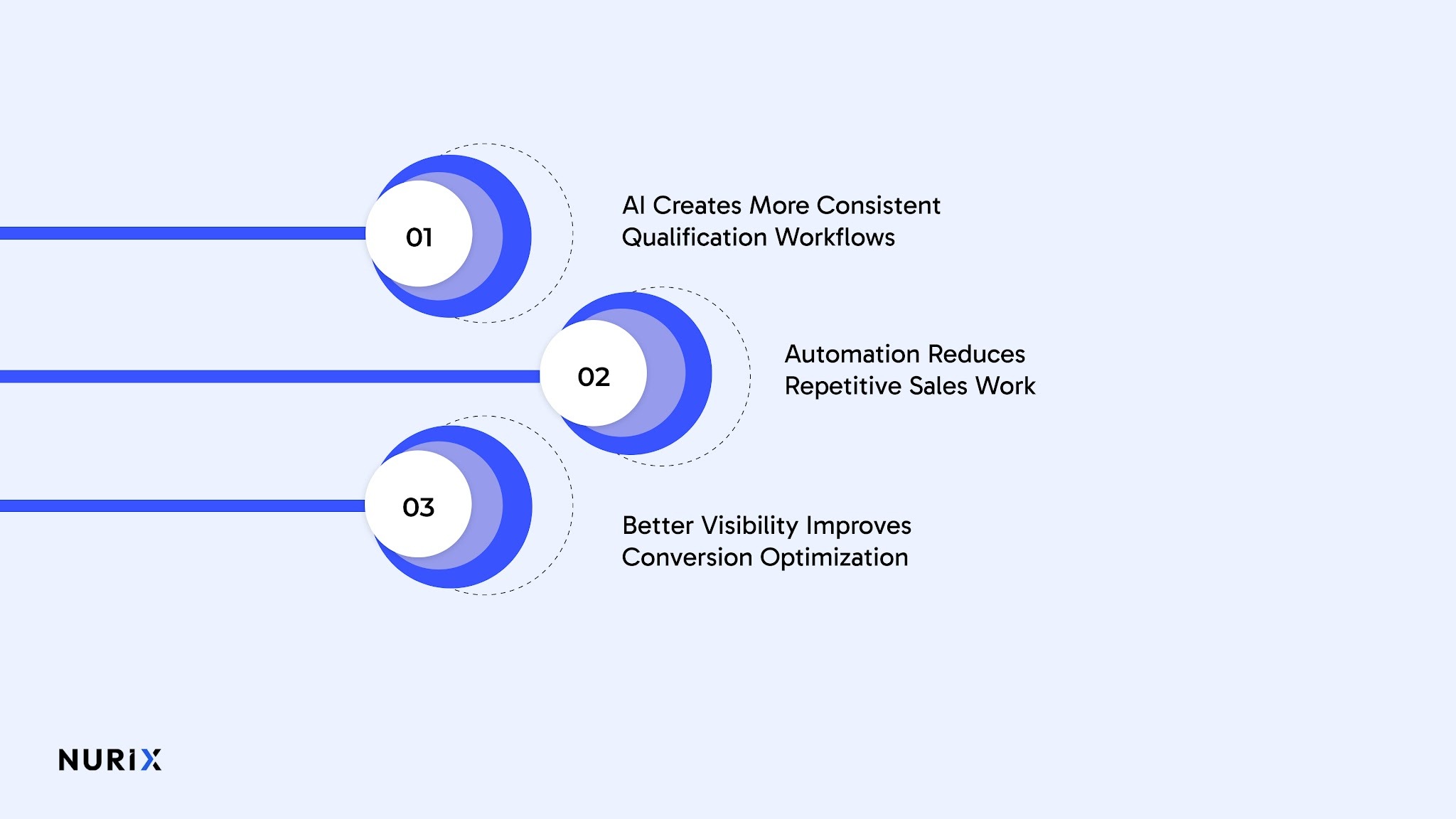
Insurance teams are increasingly using AI qualification workflows to reduce delays between inbound inquiries and initial engagement. Faster response times are especially important in competitive insurance environments where prospects often compare multiple providers before making a decision.
AI voice agents help maintain continuous qualification coverage by responding to inquiries immediately instead of relying entirely on agent availability.
- Reduced lead drop-off: Faster engagement helps reduce abandonment because prospects are less likely to move to competing providers while waiting for callbacks.
- Immediate follow-up: AI qualification systems can respond instantly to inbound inquiries, helping insurance teams engage leads while purchase intent is still high.
- Higher qualification coverage: Automated qualification workflows help teams handle larger inquiry volumes without leaving lower-priority leads unanswered.
AI Creates More Consistent Qualification Workflows
Manual qualification often varies depending on agent experience, workload, or follow-up timing. AI-assisted qualification workflows help standardize how prospects are screened, prioritized, and routed across insurance sales operations.
This consistency becomes increasingly important as lead volumes grow across multiple channels and teams.
- Standardized qualification logic: AI workflows apply the same qualification process across every interaction, helping reduce inconsistencies in lead evaluation.
- Reduced human variability: Automated qualification minimizes differences in questioning, data collection, and lead prioritization between agents.
- Better lead prioritization: AI systems can identify higher-intent prospects earlier by analyzing customer responses, qualification signals, and conversation context.
Automation Reduces Repetitive Sales Work
Insurance sales teams often spend significant time on repetitive intake tasks before actual sales conversations begin. AI-assisted workflows help reduce this administrative workload by automating early-stage qualification processes.
This allows agents to focus more on consultative sales conversations and policy discussions.
- Intake automation: AI voice agents can collect customer details, policy interests, and qualification information during initial interactions.
- Data collection: Automated workflows help capture lead information consistently across channels without requiring manual entry.
- Routing coordination: AI systems can direct qualified leads to the correct sales teams based on customer intent, geography, or policy type.
- Administrative workload reduction: Reducing repetitive qualification tasks helps sales teams spend more time on high-value customer engagement.
Better Visibility Improves Conversion Optimization
As qualification workflows scale, operational visibility becomes more important for improving conversion performance. Insurance teams increasingly rely on analytics and workflow monitoring to understand where leads are dropping off or qualification delays are occurring.
Better visibility also helps operations leaders optimize staffing, routing logic, and qualification workflows more effectively over time.
- Qualification analytics: Teams can monitor qualification performance to identify trends in lead quality, engagement, and conversion readiness.
- Lead tracking: Tracking lead movement across qualification stages helps teams identify where delays or drop-offs occur within sales workflows.
- Workflow visibility: Operational visibility helps managers understand how qualification requests move across systems, teams, and escalation paths.
- Conversion monitoring: Monitoring conversion patterns helps insurance teams optimize qualification strategies and improve sales efficiency at scale.
Also Read: Claims Automation in Insurance [2026]: Process and Use Cases
Common Challenges Insurance Teams Face When Deploying AI Qualification
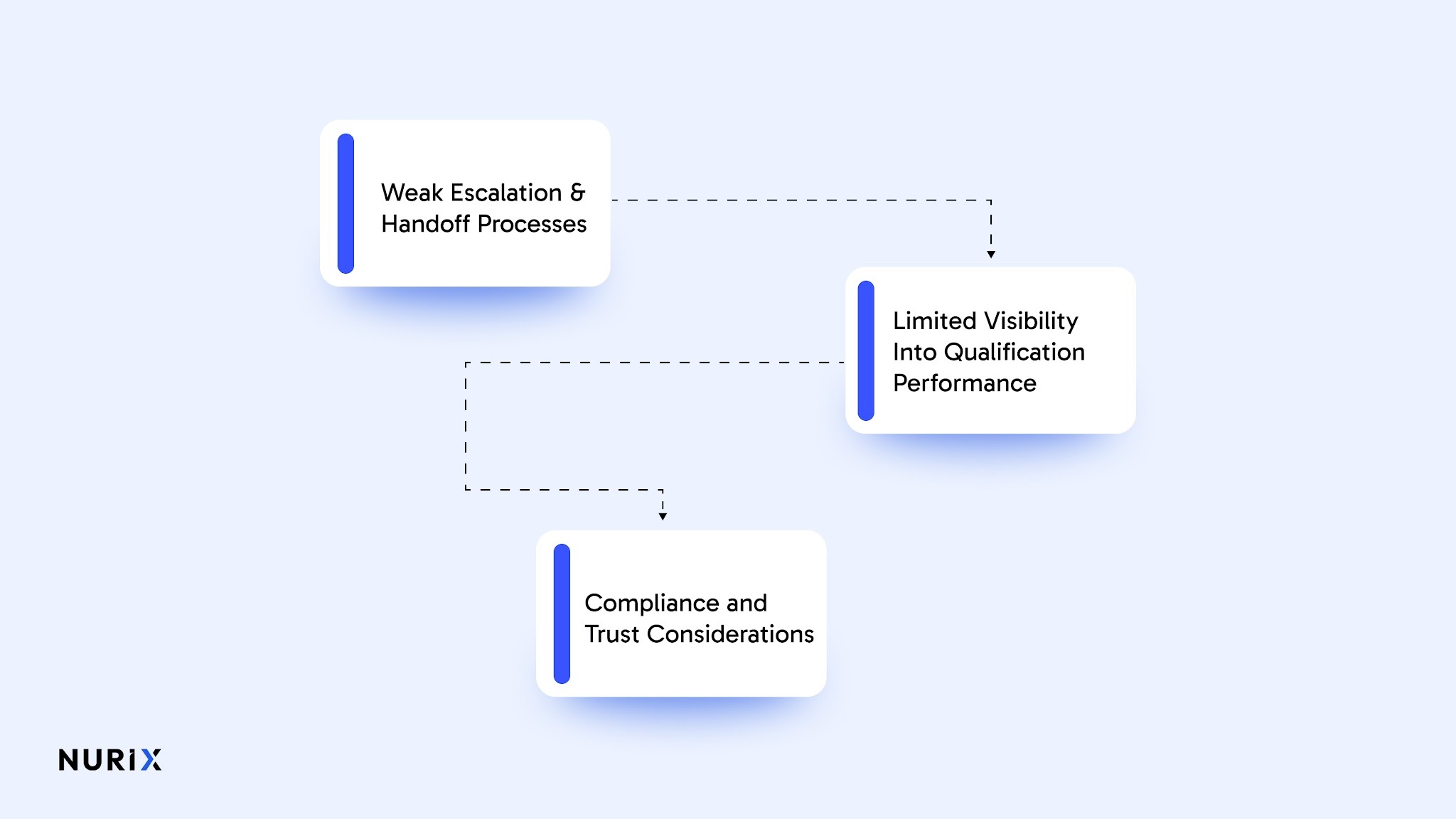
Many insurance organizations operate across multiple Customer Relationship Management (CRM) platforms, lead management tools, communication systems, and policy databases. When these systems are poorly connected, AI qualification workflows often become fragmented as well.
This creates operational issues where customer information must be synced manually, qualification updates are delayed, and sales teams struggle to maintain a consistent view of lead activity. In some cases, leads may be routed incorrectly or duplicated across systems, which reduces qualification efficiency and creates additional administrative workload for sales teams.
Disconnected workflows also make it harder for insurance operations leaders to monitor how qualification requests move through the sales pipeline.
Weak Escalation and Handoff Processes
AI qualification workflows are only effective when escalation and handoff processes are properly coordinated. In many deployments, customer context is lost when conversations move between AI systems and human agents.
This often leads to repetitive questioning, delayed follow-up, and inconsistent customer experiences. Prospects may need to repeat policy details or qualification information multiple times before reaching the appropriate representative.
Poor handoff quality also affects conversion performance because qualified leads lose momentum when escalation workflows are slow or poorly structured.
Limited Visibility Into Qualification Performance
Insurance teams often struggle to measure how effectively qualification workflows are performing after deployment. Limited reporting and fragmented workflow visibility make it difficult to identify where leads are dropping off or where response delays occur.
Without operational observability, teams may not notice qualification gaps until conversion performance declines. This also limits the ability to optimize routing logic, staffing decisions, and qualification workflows over time.
As AI qualification systems scale across channels and regions, visibility into workflow performance becomes increasingly important for maintaining operational consistency.
Compliance and Trust Considerations
Insurance qualification workflows frequently involve sensitive customer information, including personal details, policy requirements, and financial data. Because of this, compliance and customer trust remain important considerations when deploying AI-driven qualification systems.
Insurance teams must ensure customer consent is handled properly while maintaining clear auditability across conversations and workflow actions. Organizations also need visibility into how qualification data is collected, stored, routed, and accessed across systems.
Enterprise teams increasingly evaluate AI qualification platforms based not only on automation capabilities, but also on governance, workflow control, and operational transparency.
Also Read: How to Increase Insurance Sales Through Automation Techniques
Why Enterprise Insurance Teams Need More Than Simple Voice Bots
Many basic voice bots are designed around fixed scripts and predefined responses. While this may work for simple inquiries, insurance qualification workflows are often far more dynamic and context-dependent.
Prospects may ask coverage-specific questions, provide incomplete information, switch topics during conversations, or require clarification before qualification can continue. Static conversation flows struggle to adapt to these situations, which can result in poor customer experiences and incomplete qualification outcomes.
Limited adaptability also creates operational issues when workflows require escalation handling, underwriting preparation, or coordination across multiple systems and teams.
Insurance Qualification Requires Orchestration
Enterprise insurance qualification workflows rarely happen inside a single system. Qualification often depends on coordinated actions across Customer Relationship Management (CRM) platforms, scheduling systems, policy databases, underwriting workflows, and sales operations tools.
That is why orchestration becomes critical for enterprise deployments.
AI qualification systems must be able to:
- Coordinate routing across teams
- Sync qualification data across systems
- Trigger follow-up workflows
- Support multi-step execution
- Maintain context throughout the customer journey
Without orchestration, automation workflows can become fragmented, forcing sales teams to manually bridge operational gaps between systems.
Operational Visibility Matters at Scale
As AI qualification workflows scale across regions, products, and teams, operational visibility becomes increasingly important for maintaining performance consistency.
Insurance operations leaders need visibility into how qualification workflows are performing across the entire sales process. This includes monitoring qualification quality, tracking escalation performance, identifying workflow bottlenecks, and understanding where leads are dropping off during the qualification journey.
Without strong observability, teams may struggle to optimize qualification workflows or identify operational inefficiencies before they begin affecting conversion outcomes. Enterprise teams increasingly prioritize workflow monitoring and analytics to maintain better control over AI-assisted qualification systems at scale.
Also Read: AI for Insurance Brokers: 9 Use Cases and KPIs That Matter
How NuPlay Supports AI Lead Qualification for Insurance Teams
As insurance sales operations scale, maintaining fast and consistent lead qualification becomes increasingly difficult. Teams often manage large inquiry volumes across multiple channels, systems, and product lines, which creates challenges around response speed, routing accuracy, qualification consistency, and operational visibility.
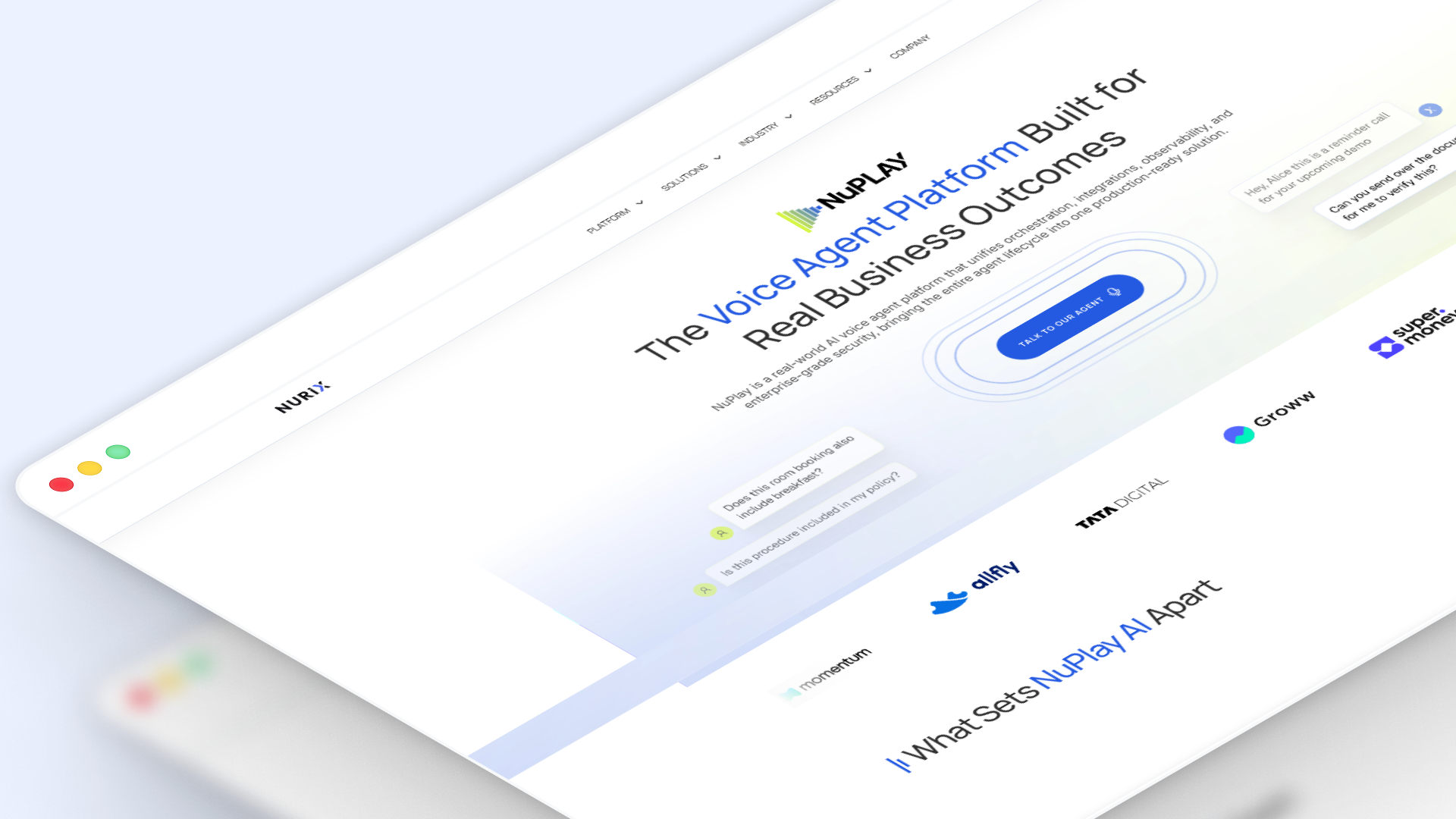
NuPlay is an enterprise voice and chat AI platform built to automate support, sales, and workflow operations across channels. Its Sales AI Agents help insurance teams streamline qualification workflows through conversational lead qualification, appointment scheduling, lead routing, and response automation.
NuPlay also helps insurance teams coordinate qualification workflows across systems through:
- CRM integrations
- Workflow orchestration
- Cross-platform coordination
- Multi-step workflow execution
As qualification workflows grow more complex, operational visibility becomes increasingly important for maintaining conversion performance. NuPulse helps teams improve workflow monitoring through:
- Qualification analytics
- Workflow monitoring
- Response-time visibility
- Conversion observability
- Operational reporting
These capabilities help insurance teams improve qualification coverage, reduce manual workload, and maintain more consistent lead engagement across high-volume sales environments.
Final Thoughts
AI lead qualification is becoming increasingly important as insurance teams work to improve response speed, qualification consistency, and conversion efficiency across growing inbound lead volumes. Faster engagement alone is not enough if workflows remain fragmented or qualification visibility is limited across systems and teams.
One practical way to evaluate your current qualification process is to identify where leads experience delays, repetitive intake steps, or poor routing coordination. These workflow gaps often create the biggest impact on conversion performance and operational efficiency.
AI lead qualification works best when automation is supported by orchestration, integrations, and operational visibility across the entire qualification workflow.
If your insurance team is evaluating AI qualification workflows, book a Custom Demo to see how NuPlay automates qualification, routing, and sales workflows across inbound channels.