Customer retention has become a bigger priority for businesses as acquisition costs continue to rise across digital channels. Research from Bain & Company found that increasing customer retention by just 5% can increase profits by 25% to 95%, which is one reason more brands are investing in long-term engagement strategies instead of one-time campaigns.
That shift is driving growing interest in automated rewards and loyalty programs. Traditional loyalty systems often rely on manual campaign management, static offers, and disconnected customer workflows, which makes personalization difficult as engagement volumes grow.
Businesses are increasingly moving toward automated loyalty workflows that can trigger rewards, personalize engagement, coordinate communication across channels, and improve retention visibility in real time. In this article, you will learn how to build an automated rewards and loyalty program in 2026, what makes loyalty automation effective, and how orchestration improves customer engagement workflows over time.
Executive Summary (2026): Automated rewards and loyalty programs help businesses improve retention through personalized engagement, faster rewards delivery, and scalable customer communication workflows. As loyalty operations become more complex, orchestration and workflow automation are becoming essential for maintaining consistent customer experiences across channels. NuPlay is an enterprise voice and chat AI platform built to automate support, sales, and workflow operations across channels.
Key Takeaways:
- Retention Consistency: Automated loyalty workflows improve retention consistency because customers receive timely rewards, engagement triggers, and follow-up communication without manual delays.
- Personalized Rewards: Dynamic rewards increase participation because customers are more likely to engage with offers based on behavior, preferences, and purchase activity.
- Workflow Orchestration: Loyalty automation requires more than simple points systems because customer engagement workflows often span Customer Relationship Management (CRM) platforms, messaging channels, and support operations.
- Cross-Channel Engagement: Coordinated communication improves loyalty participation because customers increasingly interact across email, SMS, apps, and customer support channels simultaneously.
- Engagement Visibility: Analytics and workflow visibility improve optimization because businesses can identify participation trends, reward performance, and customer engagement gaps more effectively.
What an Automated Rewards and Loyalty Program Actually Means
An automated rewards and loyalty program uses workflow automation, customer behavior tracking, and real-time engagement triggers to manage loyalty interactions without relying heavily on manual campaign execution.
Instead of operating through static points systems alone, these programs automatically personalize rewards, trigger customer communication, track engagement activity, and coordinate loyalty workflows across channels and systems. The goal is not just to distribute rewards, but to create more consistent customer engagement that improves retention, repeat purchases, and long-term customer value at scale.
Modern automated rewards and loyalty programs are increasingly built around customer behavior, engagement timing, and workflow automation rather than isolated transactions.
These workflows often include:
- Trigger-based engagement: Loyalty systems can automatically respond to customer actions such as purchases, inactivity, referrals, or milestone achievements without requiring manual campaign execution.
- Dynamic rewards workflows: Businesses can adjust rewards based on customer activity, purchase frequency, loyalty tier, or engagement patterns instead of offering the same incentives to every customer.
- Behavioral personalization: Automated workflows help personalize customer communication and rewards based on browsing behavior, transaction history, and engagement preferences.
- Automated lifecycle campaigns: Loyalty programs can trigger onboarding offers, re-engagement campaigns, renewal reminders, or retention incentives automatically throughout the customer lifecycle.
For example, a customer who becomes inactive for a certain period can automatically receive a personalized retention offer instead of waiting for a manually scheduled campaign.
How Automated Loyalty Workflows Operate
Automated loyalty workflows continuously track customer interactions and trigger engagement actions in real time. Instead of relying on periodic campaigns, businesses increasingly use workflow automation to coordinate customer engagement across multiple channels and systems simultaneously.
These workflows typically include:
- Customer activity tracking: Loyalty systems monitor customer actions such as purchases, referrals, app activity, or engagement frequency to determine reward eligibility and engagement timing.
- Reward qualification: Automated workflows can validate loyalty milestones and trigger rewards automatically based on predefined business rules and customer behavior.
- Automated messaging: Loyalty platforms can send reward notifications, personalized offers, engagement reminders, and loyalty updates without manual coordination from marketing teams.
- Cross-channel engagement: Businesses can coordinate loyalty communication across email, SMS, apps, customer portals, and support channels to maintain more consistent customer engagement.
This allows businesses to maintain ongoing customer interaction without manually managing every loyalty campaign or reward trigger.
Why Workflow Coordination Matters
As loyalty programs become more complex, workflow coordination becomes increasingly important for maintaining a consistent customer experience. Customer engagement data often exists across Customer Relationship Management (CRM) systems, ecommerce platforms, communication tools, customer support platforms, and mobile applications simultaneously.
Without proper coordination, loyalty operations can become fragmented and difficult to manage at scale.
Effective loyalty automation depends on:
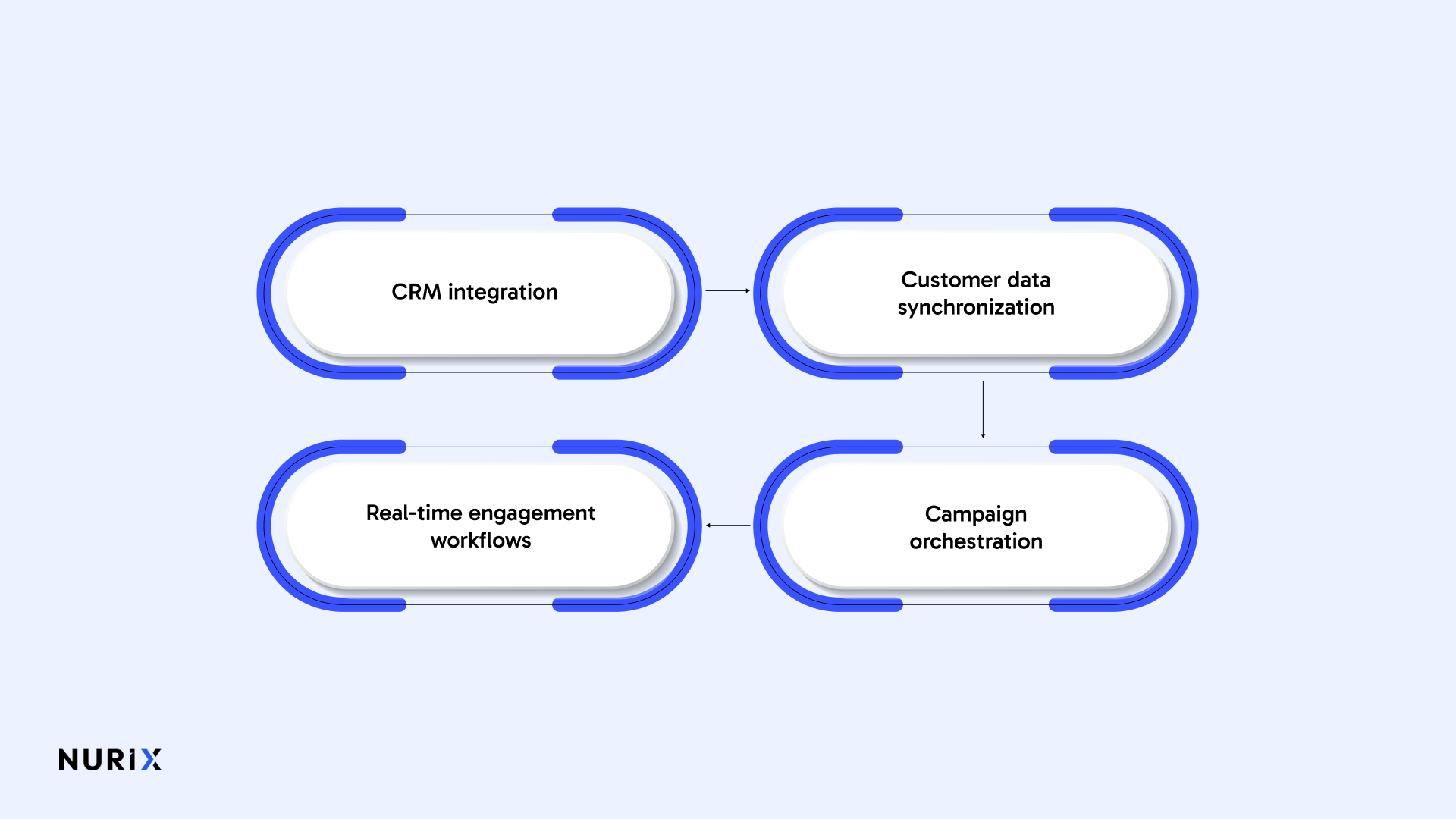
- CRM integration: Loyalty workflows need access to customer profiles, purchase history, and engagement data to personalize rewards and automate customer interactions accurately.
- Customer data synchronization: Real-time synchronization helps ensure customer activity, loyalty status, and reward eligibility remain consistent across systems and channels.
- Campaign orchestration: Businesses often need to coordinate multiple engagement workflows simultaneously across retention campaigns, promotional offers, and customer lifecycle programs.
- Real-time engagement workflows: Automated workflows help businesses respond immediately to customer actions instead of relying on delayed manual outreach or scheduled campaigns.
Strong workflow coordination helps businesses improve retention consistency while reducing operational friction across customer engagement and loyalty operations.
Also Read: AI Voice Bots: The Essential Guide to Enterprise Operations
Why Traditional Loyalty Programs Struggle to Scale in 2026
Today, many loyalty programs still operate through static rules where customers earn points after purchases and redeem rewards later. While this approach supports basic retention efforts, it often struggles to maintain long-term engagement as customer expectations become more personalized and real-time.
Customer expectations have changed significantly as digital engagement becomes more personalized and immediate across channels. Generic rewards programs that offer the same discounts or incentives to every customer often struggle to maintain long-term participation.
Several factors are increasing pressure on loyalty programs:
- Generic rewards fatigue
- Omnichannel customer expectations
- Real-time engagement demand
Customers increasingly expect loyalty experiences that reflect their behavior, preferences, and engagement history instead of static promotional campaigns.
Manual Loyalty Workflows Create Operational Friction
Many traditional loyalty programs still rely on manual coordination across marketing teams, customer databases, communication platforms, and rewards systems. As customer engagement volumes grow, these workflows become harder to manage consistently.
This often creates:
- Delayed rewards processing
- Inconsistent communication
- Administrative overhead
- Fragmented customer tracking
Operational delays can reduce customer participation and make loyalty programs feel disconnected from the overall customer experience.
Static Programs Often Reduce Participation
Static loyalty programs often struggle because rewards and engagement campaigns remain unchanged regardless of customer behavior or engagement patterns.
This can lead to:
- Irrelevant offers
- Low engagement rates
- Poor retention visibility
- Reduced repeat participation
Without personalization and workflow automation, businesses may struggle to keep loyalty programs relevant as customer expectations and engagement channels continue evolving.
Also Read: AI Support Automation Tools (2026): 6 Platforms Compared
Core Components of a Successful Automated Loyalty Program
Successful loyalty programs use customer behavior and engagement data to personalize rewards instead of relying on static offers. Key components include:
- Customer segmentation: Grouping customers based on activity, spending, or engagement patterns.
- Behavioral triggers: Automatically triggering rewards based on purchases, referrals, or inactivity.
- Engagement-based rewards: Rewarding actions such as reviews, app usage, or repeat engagement.
- Dynamic incentives: Adjusting offers based on customer behavior and loyalty goals.
Omnichannel Communication Workflows
Modern loyalty programs need consistent engagement across multiple customer channels. This often includes:
- Email engagement: Loyalty updates, rewards alerts, and retention campaigns.
- SMS notifications: Time-sensitive reminders and promotional alerts.
- App messaging: Real-time loyalty engagement inside mobile applications.
- Support-channel coordination: Consistent loyalty communication during customer support interactions.
Automated Reward Fulfillment
Automation helps businesses manage rewards more efficiently as participation scales. Important workflow areas include:
- Reward eligibility: Automatically validating loyalty milestones and reward conditions.
- Redemption workflows: Managing reward claims and fulfillment automatically.
- Customer notifications: Sending confirmations and loyalty updates in real time.
- Escalation handling: Managing exceptions or failed reward workflows more efficiently.
Analytics and Retention Visibility
Operational visibility helps businesses optimize loyalty performance over time. This typically includes:
- Engagement tracking: Monitoring customer participation across campaigns.
- Participation analytics: Identifying which rewards drive stronger engagement.
- Retention measurement: Tracking repeat activity and long-term loyalty trends.
- Workflow monitoring: Identifying communication delays and workflow gaps earlier.
Also Read: How to Reduce Customer Support Costs with AI: A 2026 Guide
How to Build an Automated Rewards and Loyalty Program Optimized for 2026
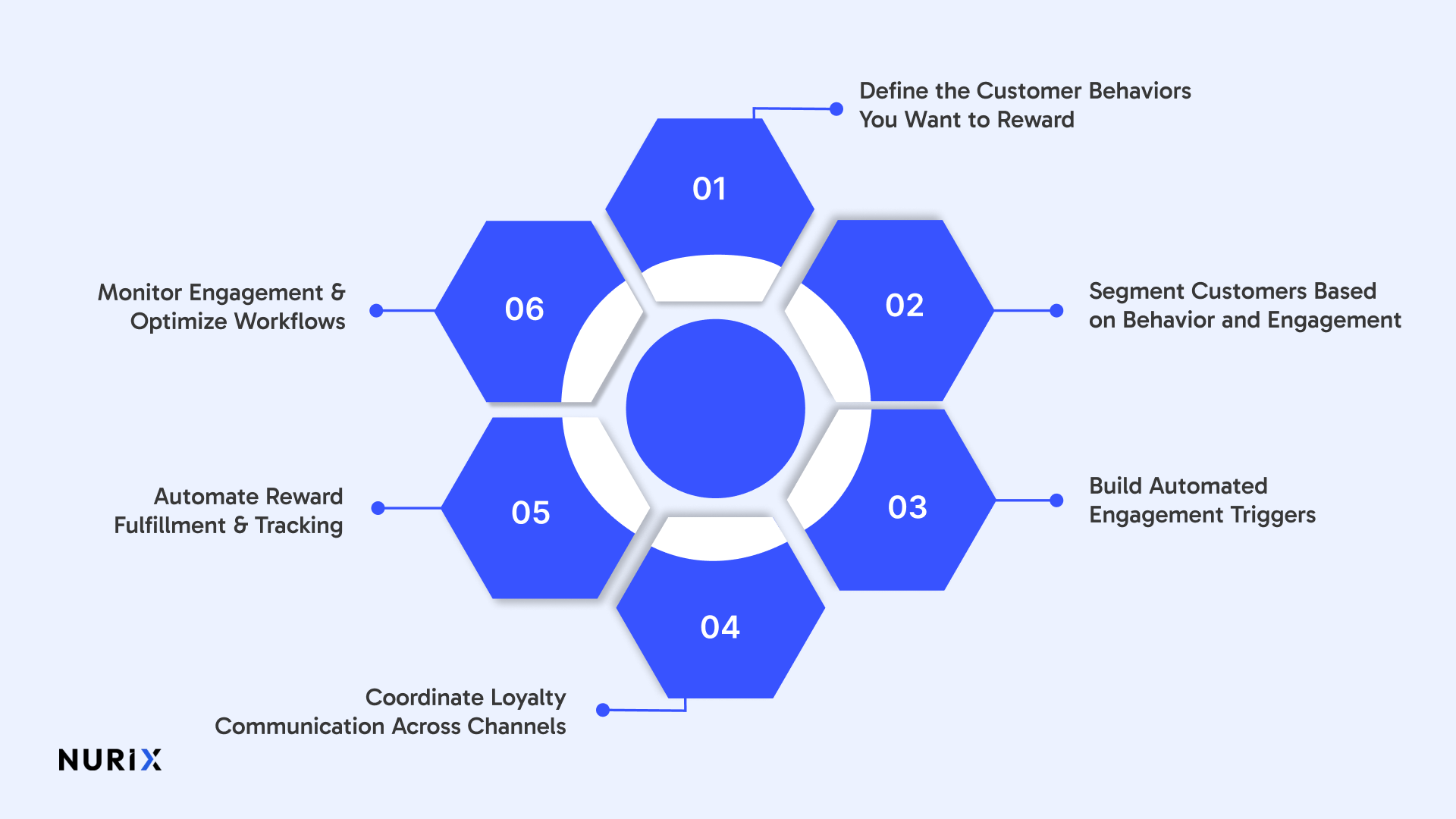
Building an automated rewards and loyalty program in 2026 requires more than offering discounts or points after purchases. Businesses increasingly need loyalty workflows that can personalize engagement, automate communication, and coordinate customer interactions across multiple channels in real time.
The goal is to create a loyalty experience that remains consistent, scalable, and relevant as customer expectations continue evolving. This usually involves combining customer behavior tracking, workflow automation, personalized rewards logic, and engagement analytics into a more connected retention strategy.
Step 1: Define the Customer Behaviors You Want to Reward
Start by identifying which customer actions contribute most to retention and long-term engagement. Many businesses now reward behaviors beyond purchases alone. This may include:
- Repeat purchases
- Referrals
- App engagement
- Subscription renewals
- Product reviews
- Loyalty milestone activity
Clear reward goals help businesses build more focused loyalty workflows.
Step 2: Segment Customers Based on Behavior and Engagement
Customer segmentation helps businesses personalize rewards more effectively instead of offering the same incentives to every user. Segmentation can be based on:
- Purchase frequency
- Spending behavior
- Customer lifecycle stage
- Engagement activity
- Loyalty tier
Personalized rewards typically generate stronger participation than static campaigns.
Step 3: Build Automated Engagement Triggers
Automated loyalty workflows should respond to customer activity in real time instead of relying entirely on scheduled campaigns. Common engagement triggers include:
- First purchase completion
- Repeat order activity
- Customer inactivity
- Referral completion
- Loyalty milestone achievement
These triggers help businesses maintain continuous engagement without manual coordination.
Step 4: Coordinate Loyalty Communication Across Channels
Customers often engage across multiple touchpoints, so loyalty communication should remain consistent across channels. This may include:
- Email notifications
- SMS alerts
- App messaging
- Customer support interactions
Cross-channel coordination helps create a more connected loyalty experience.
Step 5: Automate Reward Fulfillment and Tracking
Reward delivery should remain fast and consistent as loyalty participation scales. Automated fulfillment workflows help reduce delays and administrative workload. Businesses should automate:
- Reward qualification
- Redemption tracking
- Customer confirmations
- Loyalty status updates
This improves operational efficiency while maintaining a better customer experience.
Step 6: Monitor Engagement and Optimize Workflows
Loyalty programs should evolve based on customer participation and engagement performance. Analytics help businesses identify which rewards and workflows drive stronger retention outcomes. Key areas to monitor include:
- Participation rates
- Reward redemption trends
- Repeat engagement
- Customer retention
- Workflow performance
Continuous optimization helps loyalty programs remain relevant as customer behavior changes over time.
The most effective automated rewards and loyalty programs are built around personalized engagement, workflow coordination, and real-time customer interaction instead of static reward systems alone.
Businesses that combine automation, cross-channel communication, and operational visibility are often better positioned to improve long-term retention and customer engagement at scale.
Also Read: How to Implement Voice AI for Customer Service: A Step-by-Step Guide
How Automation Improves Customer Retention Workflows
Customer retention workflows become increasingly difficult to manage manually as customer engagement channels, loyalty interactions, and personalization requirements continue expanding. Automation helps businesses maintain more consistent engagement by coordinating rewards, communication, and customer interactions across systems in real time.
Instead of relying heavily on scheduled campaigns or manual follow-ups, automated workflows help businesses respond to customer behavior more quickly while improving operational efficiency across retention programs.
- Faster engagement improves participation: Automated workflows help businesses respond immediately to customer activity, which keeps loyalty engagement more consistent across the customer lifecycle.
- Personalized rewards improve retention: Automation allows businesses to tailor rewards and communication based on customer behavior, purchase history, and engagement patterns.
- Cross-channel coordination improves customer experience: Automated workflows help maintain consistent communication across email, SMS, mobile apps, and support channels.
- Reduced manual workload improves operational efficiency: Loyalty automation reduces repetitive campaign management, reward processing, and customer tracking tasks for internal teams.
- Analytics improve retention optimization: Workflow visibility and engagement analytics help businesses identify participation trends, customer drop-off points, and loyalty performance gaps more effectively.
Automation improves customer retention workflows by helping businesses deliver more personalized, consistent, and scalable customer engagement across channels. As loyalty operations grow more complex, workflow orchestration and real-time engagement coordination become increasingly important for maintaining long-term customer participation.
Also Read: AI Shopping Assistants: A Comprehensive Guide
Common Mistakes Businesses Make With Loyalty Automation
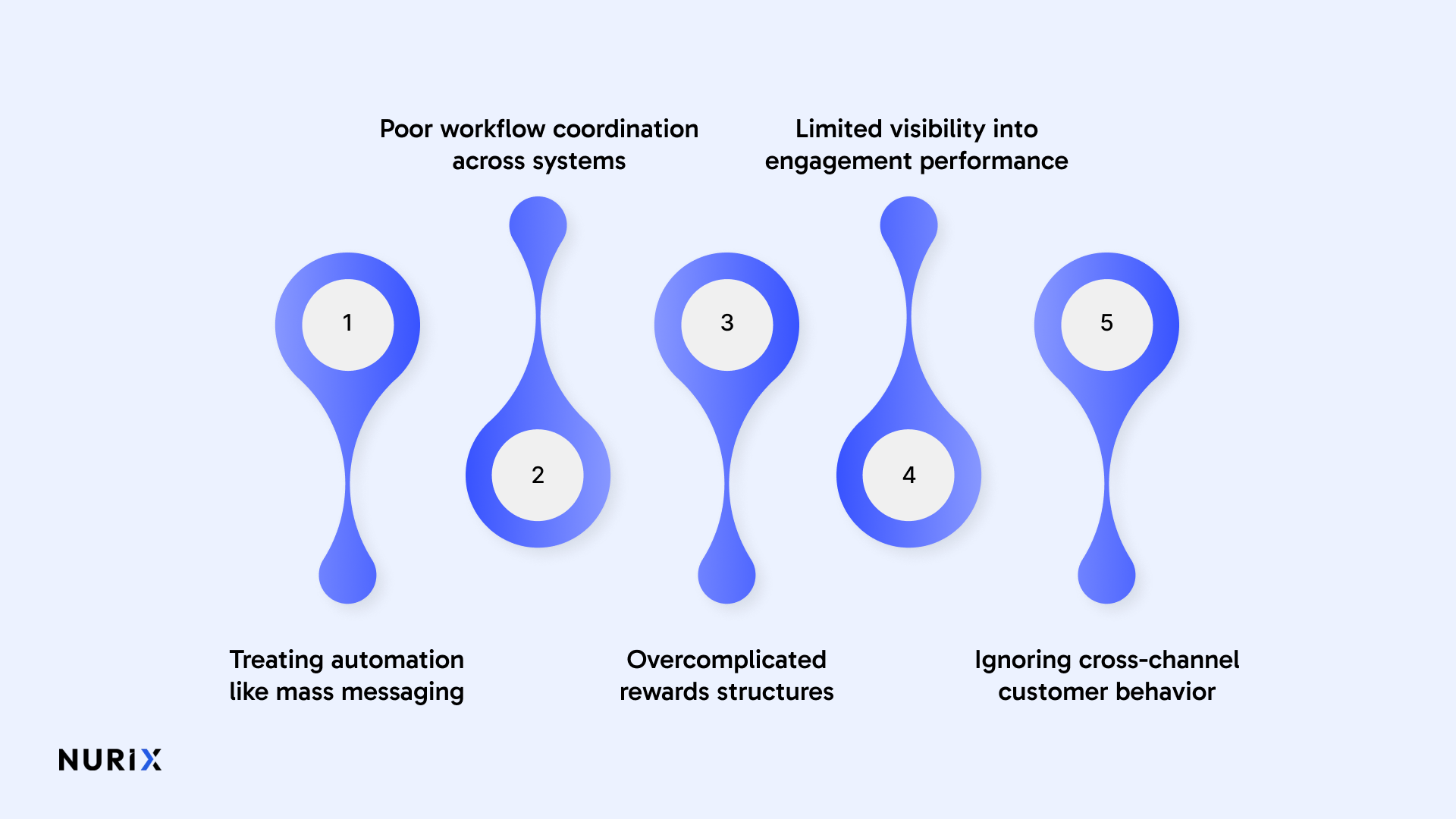
Many businesses invest in loyalty automation expecting immediate retention improvements, but poorly structured workflows often create disconnected customer experiences instead of stronger engagement.
Automation works best when loyalty programs are built around customer behavior, workflow coordination, and operational visibility rather than repetitive mass campaigns.
Several operational issues continue to limit the effectiveness of automated loyalty programs across industries.
- Treating automation like mass messaging: Sending the same offers and engagement campaigns to every customer often reduces participation and creates loyalty fatigue over time.
- Poor workflow coordination across systems: Disconnected Customer Relationship Management (CRM) systems, communication platforms, and rewards tools can create inconsistent customer experiences and fragmented loyalty tracking.
- Overcomplicated rewards structures: Loyalty programs with confusing eligibility rules, difficult redemption processes, or excessive tiers often discourage customer participation.
- Limited visibility into engagement performance: Businesses that lack analytics and workflow monitoring may struggle to identify customer drop-off points or underperforming loyalty campaigns.
- Ignoring cross-channel customer behavior: Loyalty workflows that operate separately across email, apps, SMS, and support channels often create inconsistent engagement experiences.
Successful loyalty automation depends on workflow simplicity, personalization, and coordinated customer engagement across systems and channels.
Businesses that prioritize operational visibility and customer-centric workflows are typically better positioned to improve long-term retention outcomes.
Why Loyalty Automation Requires More Than Simple Campaign Tools
Modern loyalty workflows extend far beyond scheduled email campaigns or discount notifications. Businesses now manage customer engagement across ecommerce platforms, mobile apps, Customer Relationship Management (CRM) systems, support channels, and communication tools simultaneously.
As customer journeys become more dynamic, loyalty workflows also need to respond to behavior, engagement timing, and cross-channel activity in real time. Basic campaign tools often struggle with this complexity because they operate as isolated engagement systems rather than connected workflows.
Cross-System Orchestration Matters at Scale
Loyalty automation becomes harder to manage as customer data and engagement workflows spread across multiple systems. Reward qualification, messaging, segmentation, and retention campaigns often depend on synchronized workflows between platforms.
This is where orchestration becomes important.
Unlike basic automation tools that focus mainly on message delivery, orchestration helps businesses coordinate:
- Customer engagement triggers
- CRM-connected workflows
- Cross-platform communication
- Reward fulfillment actions
- Real-time workflow execution
Strong orchestration helps businesses maintain more consistent loyalty experiences across channels and systems.
Operational Visibility Becomes Critical
As loyalty operations scale, businesses need better visibility into engagement performance across campaigns and workflows. Without analytics and workflow monitoring, it becomes difficult to identify participation gaps, delayed engagement, or underperforming loyalty workflows.
Operational visibility helps businesses:
- Track participation trends
- Monitor engagement workflows
- Identify retention bottlenecks
- Optimize loyalty performance
- Improve lifecycle coordination
This becomes increasingly important for businesses managing customer engagement across multiple channels and customer segments simultaneously.
How NuPlay Supports Automated Loyalty and Retention Workflows
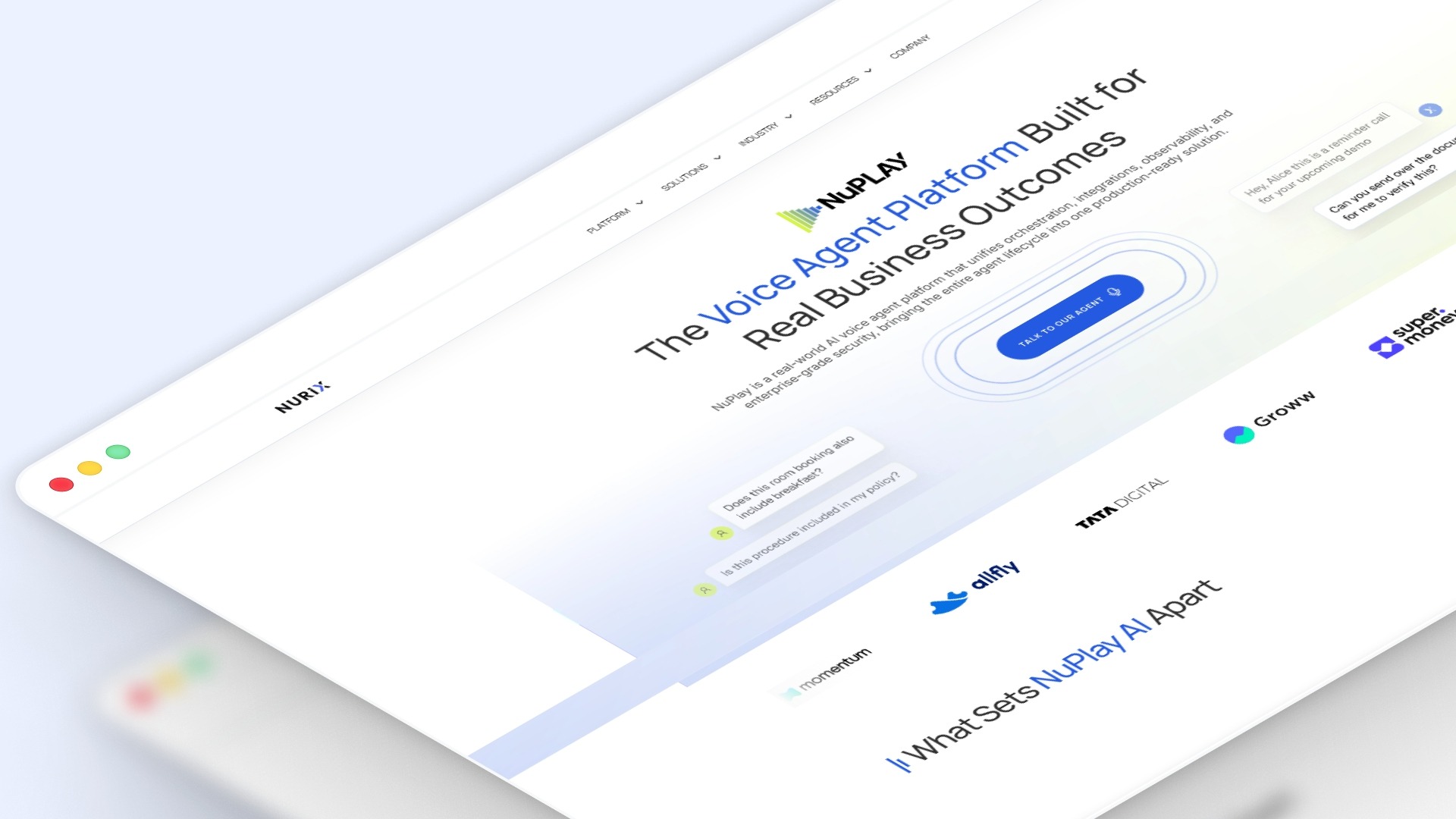
As loyalty operations scale, maintaining consistent customer engagement across channels becomes increasingly difficult. Businesses often manage customer interactions across Customer Relationship Management (CRM) systems, ecommerce platforms, messaging tools, support channels, and mobile applications simultaneously.
This creates challenges around personalization, workflow coordination, engagement timing, and operational visibility.
NuPlay is an enterprise voice and chat AI platform built to automate support, sales, and workflow operations across channels. Its workflow automation capabilities help businesses streamline loyalty engagement through personalized communication, trigger-based workflows, customer lifecycle automation, and cross-channel engagement coordination.
NuPlay also helps businesses coordinate loyalty workflows across systems through:
- CRM integrations
- Workflow orchestration
- Cross-platform coordination
- Real-time engagement workflows
As loyalty programs become more complex, operational visibility becomes increasingly important for improving retention performance. NuPulse helps businesses improve workflow monitoring through:
- Engagement analytics
- Workflow visibility
- Participation tracking
- Retention observability
- Operational reporting
These capabilities help businesses improve customer retention, reduce manual campaign workload, and maintain more consistent loyalty engagement across channels.
Final Thoughts
Automated rewards and loyalty programs are becoming increasingly important as businesses work to improve retention, personalize engagement, and coordinate customer communication more effectively across growing engagement channels. Static rewards systems and disconnected campaigns often struggle to maintain long-term participation when loyalty workflows become fragmented across platforms and teams.
One practical way to evaluate your current loyalty program is to identify where customer engagement still depends heavily on manual coordination, delayed communication, or disconnected workflows. These operational gaps often create the biggest impact on retention consistency and customer participation.
Automated rewards and loyalty programs work best when personalized engagement, workflow orchestration, and cross-channel communication operate together in real time to support long-term customer retention and loyalty participation.
If your team is evaluating loyalty automation workflows, book a Custom Demo to see how NuPlay automates customer engagement and retention workflows across channels.